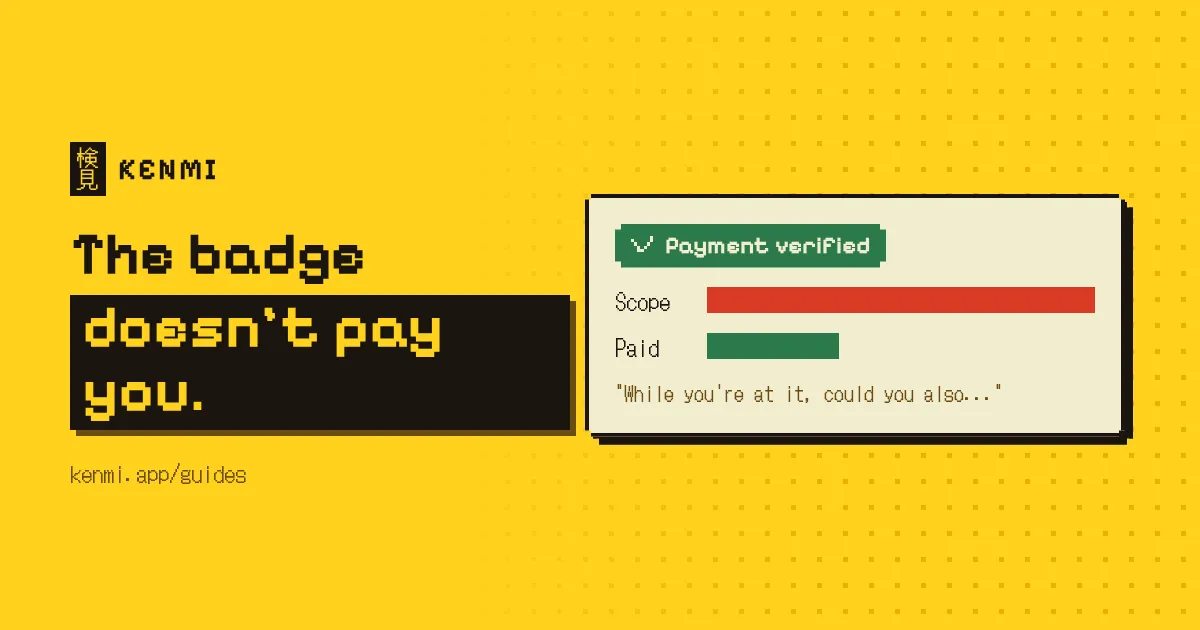
Upwork payment verified means the client has added a billing method that Upwork has checked. It makes outright fraud less likely, but it doesn't mean the client pays fairly. Verified clients can still underpay, stretch the scope and expect extra work for free.
What the badge actually checks
When a client adds a card or another billing method, Upwork checks that it's real and usable. Once that's done, a "Payment verified" label shows up in the client panel next to their job posts.
And that's the whole story. The badge tells you a payment method exists. It doesn't tell you whether the client has ever paid a freelancer on time, whether their budget matches the work they're describing, or whether they'll pay for anything that wasn't in the original agreement. It certainly doesn't tell you if they're any good to work with.
I treat it as a minimum bar. Nice to see, not a reason to relax.
When payment isn't verified
A payment method not verified on Upwork doesn't automatically mean a scam. Sometimes the client is brand new and hasn't finished setting up. Some honest people post a job first and sort out billing later, which is a bit careless but not sinister.
Still, I'd be more careful with an unverified client, for two reasons. My guess is that most scammers avoid verifying, since a real card ties the account to something traceable. And practically speaking, a client with nothing on file has nothing to pay you with if things go sideways.
If an unverified client looks promising, you don't have to skip them. Ask for the first milestone to be funded before you do anything. If they won't fund it, that's your answer.
Why verified clients still cause trouble
This is the part most guides skip. In my experience, verified clients rarely run the classic scams. What they do more often is quieter. They try to get as much work as possible for as little money as possible.
It works because freelancers see the badge and relax. They stop asking for a funded milestone up front. They say yes to "small" changes without talking about cost, and assume a verified client will cover the extra hours. Often they don't.
From experience
Clients with a verified payment method have rarely tried to scam me outright. The trouble with them was scope creep and underpaying. The badge made it easy to assume extra work would be paid for, and it mostly wasn't. Paying little for a lot of work isn't fraud, but it isn't fair either, and it can cost you as much as a scam.
So I've stopped asking "is this client a scammer?" when I see the badge. The better question is whether they'll pay fairly for the work they're actually asking for.
Reading the rest of the client panel
The rest of the panel answers that question much better than the badge does. I look at it in roughly this order.
Total spent comes first. Someone who has spent thousands has paid real freelancers real money, which is more reassuring than any label. Then the hire rate and open jobs. Lots of posts with very few hires can mean someone fishing for free ideas or samples, or just someone who never makes up their mind. Neither is great.
The average hourly rate they've paid is the one people overlook, and I think it's the most honest number on the page. If a client normally pays far below the going rate for your kind of work, they'll expect the same from you, no matter what the budget field says.
Then read the reviews freelancers left them. Not the stars, the words. Comments about unclear scope, late payment or "a lot of revisions" tell you more than a 4.8 average ever will. Member since and location are last. An old account with steady spending is a good sign, and a location that doesn't match anything else about the client is worth a second look.
For red flags in the wording of the post itself, see the guide on how to spot Upwork scams.
Keeping scope creep in check
Scope creep is far easier to prevent than to fix. Most of it comes down to a few habits.
- write the scope into the contract, including what's in, how many revisions and what "done" means
- fund milestones before you start them, even with a verified client, since funded money sits in escrow if the client disappears
- break bigger jobs into several small milestones instead of one large payment at the end
- keep agreements on the platform, because a deal made on a call is hard to prove later
None of that is rude. Good clients expect it. The ones who push back against funding a milestone are telling you something, and it's worth listening.
The trickier moment is when the scope starts to grow mid-project. It rarely arrives as a formal request. It's usually something like "while you're at it, could you also...". I reply in the same friendly tone, with a price attached.
Happy to add the newsletter signup. It's outside the original scope, so it would be a separate milestone of $120 and about two extra days. If that works, add the milestone and I'll start once it's funded.
That says yes, makes the extra work visible and moves the payment into a funded milestone before any work happens. Fair clients usually just add the milestone. The ones who expected it for free were never going to pay for it, and you'd much rather find that out before doing the work than after.
The time problem
Here's the catch with all of this. Reading every client panel carefully takes time, and the best posts collect a pile of proposals within hours. By the time you've checked the reviews, the hourly rate and the spending history, the post might already have twenty proposals on it.
What I'd suggest is a quick first pass on every post and a careful look only at the handful that survive. That first pass is what Kenmi automates. It checks the client's verification and spending along with your own rules, and shows the result as Kenmi's letter grades right in the feed, so the weak posts never need opening.
Questions people ask
- What does payment verified mean on Upwork?
- It means the client has added a billing method that Upwork has checked. It says nothing about how they treat freelancers or whether they pay for extra work.
- Should I apply to clients whose payment is not verified?
- You can, but treat them with extra care. Ask them to fund the first milestone before you do any work, and walk away if they refuse.
- Does payment verified protect me from scope creep?
- No. Only clear milestones and written agreements protect you from extra unpaid work.