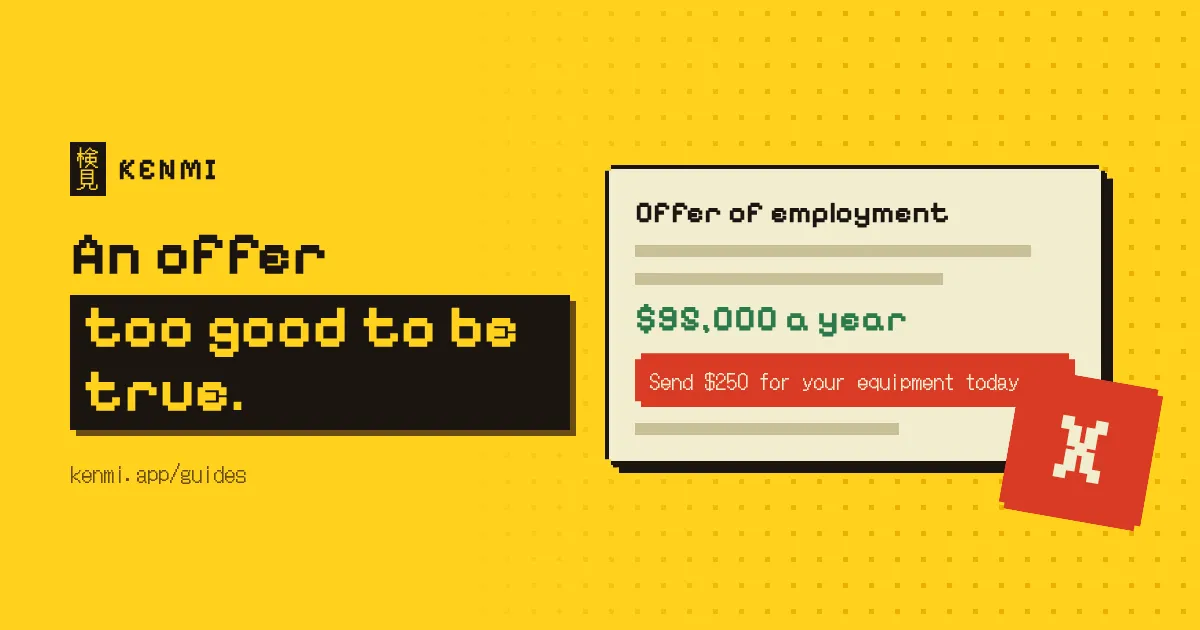
A fake job offer usually skips the real interview, arrives fast and asks for something like money, bank details, ID or a payment for equipment. If an offer comes without ever speaking to a person, or asks you to pay anything, treat it as a scam until you confirm it with the company.
The signs are in the details
Fake offers are built to look like real ones. They borrow a real company's name and logo, come as a tidy PDF letter, and offer a salary that's just high enough to be exciting without being obviously silly. At a glance, they pass.
Look closer at how you got there, though. Most fake offers follow a hiring process that barely happened. Maybe you chatted with someone over text, filled in a form or sat through a short automated interview, and then the offer turned up. Nobody ever spoke to you as a person.
Speed is the next giveaway. Real hiring is slow, sometimes painfully so. A fake offer can land within hours of applying, and it often comes with a deadline to accept by tomorrow.
Then check where it came from. Real recruiters write from the company's own domain, so an offer from a Gmail or Outlook address claiming to be from a large company should make you stop. The same goes for a display name that says "HR Team" sitting on top of a random address.
And finally, what do they want from you? This is where the scam shows itself. Fees for training, equipment, software or a background check. A copy of your ID, your bank details or your tax number before you've signed anything real. Or the classic fake cheque. They send you a cheque to buy equipment from "their supplier", you pay the supplier, and the cheque bounces a week later. The money you sent is gone.
Why fake interviews are everywhere now
Automated and AI-led interviews have become a normal part of hiring at a lot of companies. That makes them very easy to copy. A scammer can run hundreds of "interviews" at once with almost no effort, and candidates have learned not to question them.
From experience
AI interviews have become very common, and in my experience most of them haven't led anywhere real. I can't prove it, but I'm fairly sure many exist mainly to collect data, maybe even to train a model. Employers who genuinely want to hire put in the effort to have at least one human-to-human interview.
I don't treat every automated step as a red flag. Plenty of real companies use automated screening to get through a pile of applications before a person takes over. What I don't trust is a process with no human at any stage that still ends in an offer. If nobody at the company was willing to spend thirty minutes talking to you, why would they hand you a contract?
Where these offers come from
Knowing the route helps, because it tells you what to verify.
A lot of fake offers start with an application to a fake post, usually a remote role with generous pay and a vague description. Others arrive as messages you never asked for, from a "recruiter" on LinkedIn, by email or on a chat app, about a role you never applied to. That second kind deserves extra suspicion from the very first message.
Freelancers see a different version. A client on a platform asks to move the conversation to Telegram or WhatsApp, then "hires" you there, outside any payment protection. Our guide on how to spot Upwork scams covers that pattern.
Some scammers go further and copy a whole company, including the name, the logo, even the names of real employees pulled from LinkedIn. That's why a familiar brand on the letter proves very little.
Ten minutes of checking before you reply
Before you reply, sign anything or share any details, do these checks. They take about ten minutes.
- Look for the role on the company's own careers page.
- Contact the company using a phone number or email from its official website, never the contact details in the offer, and ask whether the offer is genuine.
- Read the full sender address and the domain, not just the display name.
- Look up the recruiter. A real one has a real profile and a visible history at the company.
- Read the letter slowly. Vague duties, spelling mistakes and missing details like a start date or a manager's name are common in fake job offer letters.
If something doesn't add up, ask about it. Real employers answer questions without fuss. A scammer tends to push you to hurry, or goes quiet. For recruiter messages in particular, our guide to LinkedIn job scams has more on checking profiles.
What a real offer usually looks like
It helps to hold a suspicious offer up against a real one.
A real offer comes after at least one conversation with a person, and usually several, including someone from the team you'd actually join. It arrives from the company's own domain or through a hiring platform the company clearly uses. It names real people, such as your manager, the recruiter and someone you can ask questions.
The terms are clear, too. Job title, salary, start date, hours and benefits, all in a contract you can read properly before you sign. You get a few days to decide, which is normal. Being pushed to accept within hours isn't.
Personal details come later. Bank and tax details are collected during onboarding, after you've signed, usually through an official HR system rather than a reply to an email. And a real job never costs you money. If you need equipment, the company sends it or pays for it through a normal expense process.
If the offer in front of you is missing most of that, slow down.
Lines not to cross with an unverified offer
Until you've confirmed the company and signed a real contract, a few things are off the table. Don't pay anything, for any reason. Don't deposit a cheque and send part of it back to anyone. Don't send bank details, ID or passwords. And don't install software they send you outside a normal company onboarding process, because that's sometimes the actual scam.
The best protection is not getting this far at all. A quick check on every post, covering the company, the pay and the wording, filters out most fakes before you apply. Our is this job legit checklist walks through it step by step. If you spend a lot of time on Upwork or LinkedIn, you can also add Kenmi to your browser, which grades each post against your profile and flags likely scams as you scroll.
If you already replied
Stop responding. Don't send anything else, even to "clarify". Then work through whatever applies to you.
- If you shared bank details or sent money, call your bank or payment provider right away.
- If you sent ID documents, keep an eye on your accounts and look into a credit alert or fraud alert where you live.
- Change any passwords you shared, and any accounts that reuse them.
- Report the post or profile on the platform where you found it.
- Report the scam to your local consumer protection or fraud reporting service.
None of this is embarrassing. These offers are designed by people who do it all day, and reporting them is how platforms take them down.
Questions people ask
- How can I tell if a job offer is fake?
- Fake offers usually skip a real interview, arrive from a free email address and ask for money or sensitive details. Confirm the offer with the company directly before replying.
- Are AI interviews a sign of a scam?
- Not always, but a process with no human contact at any stage is a reason to be careful. Real employers put a person in front of you before they make an offer.
- What should I do if I sent money for a fake job offer?
- Contact your bank or payment provider straight away. Then report the scam to the platform where you found the job.